

Semi private personal training is easy to misunderstand from the name alone. It sounds like a discount version of one-on-one coaching, or a group class with a nicer label. Neither description is quite right. It is its own model, with its own rules about group size, programming, and how much attention you actually get.
For a beginner, that distinction matters. The format you choose determines how quickly you learn technique, how consistent you stay, and whether you keep paying for coaching after the first month. Here is what semi private training is, how it works in practice, and how to judge whether it fits you.
What Semi Private Personal Training Means
Semi private personal training is a small group training model in which 2 to 4 clients work together under the guidance of a certified trainer. Each person follows their own customized program while sharing one coach, who moves around the group to provide individualized guidance and track progress.
Coaches define the size slightly differently. Some describe semi private groups as 2 to 4 people, others as 2 to 6, and some frame it as personal training delivered in a private setting with 1 to 3 other clients. The shared elements stay constant: a small group, one coach, and programs written for the individual rather than for the whole room.
That last detail separates semi private training from a standard group class. In a class, everyone performs the same workout at the same pace. In a semi private session, the coach runs several different programs at once and rotates between them.
How a Semi Private Session Works
One Coach, Several Individual Programs
The coach is not improvising. Before the session starts, each client already has a plan that reflects their goals, their experience level, and where they are in their training cycle. The coach knows those plans and knows what each person is working on that day. Your workout is yours. It happens alongside someone else's.
What the Coaching Looks Like During the Hour
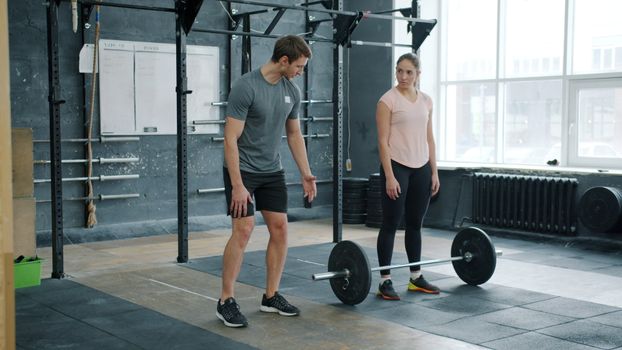
Because the group is small, the coach can move from person to person without abandoning the room. That means hands-on corrections, load adjustments, and cues delivered at the moment they matter rather than after the fact. It also means someone is watching your form on the sets you would rather rush through alone.
Why Group Size Is the Whole Point
Session quality depends almost entirely on how many people are in it. With two or three clients, attention stays tight and the session feels close to private coaching. Push the number toward six and the gaps between coaching moments widen. When you evaluate a semi private program, ask about the maximum group size, not just the average.

Semi Private Training Compared to One-on-One and Group Classes
The three formats solve different problems. This table shows where they sit relative to each other.
| Format | Who you train with | Programming | Coaching attention |
|---|---|---|---|
| One-on-one personal training | You and the trainer | Built entirely around you | Undivided, for the full session |
| Semi private personal training | Usually 2 to 4 clients, sometimes up to 6 | Individual plans run in the same session | Shared but still personal and rotating |
| Large group class | A full room of participants | One workout for everyone | General cues delivered to the group |
One-on-one coaching gives you the most attention and typically carries the highest cost per session. Semi private training is widely described as far cheaper than one-on-one while staying far more personalized than a large class. That middle position is the reason the model has grown: it makes consistent coaching affordable enough to sustain.
Who Gets the Most Out of Semi Private Training
Beginners Who Want to Be Watched
Learning movement patterns on your own is slow and easy to get wrong. In a small group you get corrected early, before a bad habit has months to settle in, and you see other people working through the same learning curve.
Busy Professionals Who Need a Fixed Appointment
Training alongside other people creates a commitment that a solo gym session rarely does. The session is scheduled, someone expects you, and the hour has a structure. For people with packed calendars, that accountability is often the difference between three sessions a week and none.
People Returning After Time Away
Coming back after a long break is safer with supervision. A coach can scale loads, adjust the plan as your capacity returns, and keep you from repeating the mistake that caused the break in the first place.
Benefits Beginners Notice First
- Individual programming instead of a one-size-fits-all class routine.
- Ongoing progress tracking, so adjustments are based on what you actually did.
- Consistency enforced by a shared schedule and a coach who notices when you are absent.
- A private or semi-private setting rather than a crowded gym floor.
- A cost per session that sits well below one-on-one rates.
- Familiar faces in the room, which makes the environment less intimidating for newcomers.
Where Semi Private Training Falls Short
- You do not have the coach's eyes on you for every rep, so long rest periods can drift.
- Your session times are tied to the group schedule rather than your own.
- If you need constant hands-on cueing, or you have a medical condition that requires close supervision, one-on-one training is the safer choice. Speak with your physician about what is appropriate for you.
Semi Private Personal Training in Rhode Island
In the Providence area, demand for small group coaching has grown alongside interest in private training. Marimar Prolific Performance, based in Rhode Island, works with clients in Newport, Pawtucket, and the greater Providence area through private personal training, wellness coaching, and online coaching. That mix means sessions can be structured around individual programs, with options for in-person or remote delivery. If you are weighing semi private training against fully private coaching, the useful question is how much hands-on attention you need right now, and how much you are likely to need three months from now.

Questions to Ask Before You Join a Semi Private Group
- What is the maximum number of clients in a session?
- Is every participant on an individual program, or does the group share one workout?
- Who writes the programs, and how often are they updated?
- How is progress tracked, and when do I see that data?
- What happens if I miss a session?
- How are clients grouped, by experience level, schedule, or something else?
- Can I move to one-on-one coaching later if I want more attention?
Frequently Asked Questions
Is semi private training as effective as one-on-one training?
For most beginners, yes. You still get an individual program, a coach who knows your history, and form corrections during the session. What you give up is undivided attention for every minute. If your goals are general strength, fitness, or habit building, the tradeoff usually favors semi private. If you are managing an injury or training for something highly specific, one-on-one is the better fit.
How many people are in a semi private training session?
Most definitions land between 2 and 4 clients with one coach, though some programs allow up to 6. The number matters more than the label. A group of two or three behaves almost like private coaching, while a group of six stretches attention thinner. Ask for the maximum size, not the typical size.
Do I follow my own workout plan in a semi private session?
You should. The defining feature of semi private training is that each client works from a customized program while sharing one coach. If everyone in the room is doing identical exercises in an identical order at the same tempo, that is a group class with a smaller headcount, not semi private personal training.
Why is semi private training cheaper than personal training?
The coach's time is split across a small number of clients, so the cost of that hour is shared. You are paying for a fraction of the coach's attention rather than all of it. That structure is what makes frequent weekly sessions affordable enough to maintain over months instead of weeks.
Can a complete beginner start with semi private training?
Yes, and beginners are often the group that benefits most. The coach can teach foundational movements, scale every exercise to your current capacity, and correct technique before habits form. The presence of other clients at similar levels also makes the environment less intimidating than a large gym floor or a fast-paced class.