
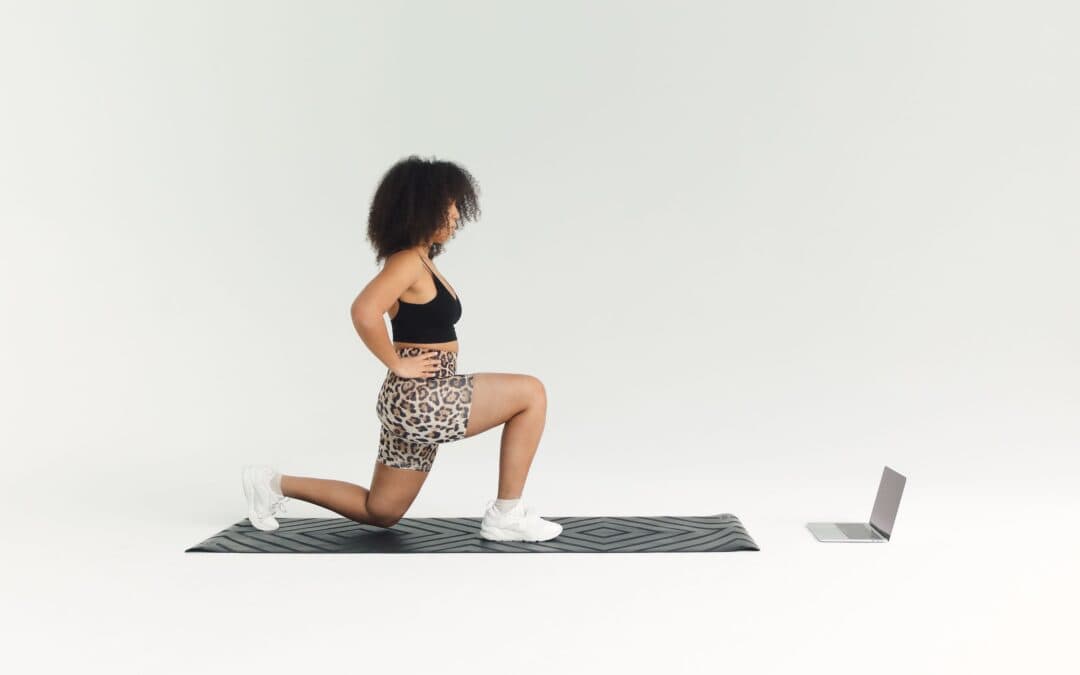
Semi private personal training sits between a one-on-one session and a group class, and it answers a question busy adults run into constantly: how do you get real coaching without booking a solo hour or vanishing into a crowded room? The model itself is simple. The details of how a session actually runs are what decide whether it fits you. Here is how the format works and the type of client it serves best.
What Semi Private Personal Training Means
The shortest honest definition comes from coaches who run these sessions: it is two to four people training together with one coach. Some programs stretch the group a little larger, but the core idea holds. Every client follows their own customized program, and a single coach moves around the group to cue, correct, and progress each person's work.
That one detail separates semi private training from formats where an entire room performs the same routine. Published program descriptions consistently describe the same structure:
- A small group, most often two to four clients, sometimes up to six
- One certified coach shared across the group
- Individual programming for each client rather than one workout for everyone
- Set session times rather than open gym access
Programs also describe semi private training as offering the same benefits as personal training, delivered in a shared setting instead of a one-on-one appointment. The coach is still working with you. You are simply sharing the hour with a small number of other people doing their own work.
How a Typical Semi Private Session Runs
Sessions are structured, and the rhythm repeats from week to week. A coach running a small group does not stand still, and clients are not left waiting for instruction either. In practice, a session tends to follow this pattern:
- Clients arrive at a scheduled time and begin their own warm-up or opening work.
- Each person follows their own program, not a shared routine for the room.
- The coach circulates, offering cues, corrections, and load adjustments to each client in turn.
- Clients set up their own equipment and track their own weights and reps.
- The coach manages the room so nobody sits idle while another person receives attention.
That emphasis on self-management surprises people new to the format. You are responsible for showing up, setting up your equipment, and logging your numbers. The coach supplies the programming, the trained eye, and the accountability. Well-run programs organize the session so one client's rest period overlaps with coaching for someone else.
Coach to Client Ratios You Will See
Ratio is the biggest variable in how a semi private session feels. Published program descriptions use a few different ranges for what is still marketed as semi private training.
| Ratio | How it is usually described |
|---|---|
| Two to four clients with one coach | The most common definition of semi private personal training |
| You plus one to three others | The same model, described from the client's point of view |
| Up to six clients with one coach | A larger version, still built around individual programs |
Any of these can work well. What matters is whether the coach can still give each person meaningful attention inside the session, and whether the ratio matches what you actually need. A group of six with individual programs is a different experience from training alongside one other person, even when both are advertised the same way.
How Semi Private Compares to Other Formats
Semi private versus one-on-one training
In a one-on-one session, the coach's attention belongs to you for the full hour. In a semi private session, that attention is shared, but the programming is still built for you and the coach still works with you directly during your sets. You give up some undivided attention and gain structure, training partners, and a lower cost per session in most cases.
Semi private versus small-group training
Industry sources treat semi private and small-group training as separate categories, and the difference usually comes down to how the programming is built. Instead of assuming the labels mean the same thing, ask a provider to explain exactly how their sessions are programmed before you commit to a plan.
What the Format Gives You
Program descriptions point to a consistent set of benefits that come from training in a small, coached group rather than alone or in a packed room.
- Structured coaching with clear direction for every session
- Accountability that keeps you consistent even with a demanding schedule
- Results that programs describe as stronger than what group classes deliver
- A cost per session that is typically lower than one-on-one coaching
None of that happens automatically. The format rewards people who show up prepared and ready to work on their own program while the coach moves through the room.
Who Semi Private Personal Training Suits Best
The format works across a wide range of clients, and a few profiles appear again and again in how these programs describe the people they coach.
- Busy adults with demanding schedules: fixed session times turn training into an appointment instead of a daily decision.
- Beginners who want guidance without isolation: a coach is present for every rep, and other people are in the room working through the same challenge.
- Clients who want their own plan: you are not following a routine written for a room full of people.
- People who need accountability: someone expects you at a specific time and is tracking your progress.
- People who want coaching at a lower cost than one-on-one training, a position programs commonly take. Confirm current rates directly with any provider.
- Experienced trainees who are self-sufficient: if you can set up your own equipment and log your own numbers, the format puts coaching where it matters most.
Who It May Not Suit
Semi private training is not the right fit for everyone, and the reasons are practical rather than a criticism of the model.
- Schedules that shift week to week. Sessions run at set times to accommodate the group, so you cannot drop in whenever you feel like it.
- Anyone who wants the coach's full attention from the first minute to the last.
- People who prefer to train completely alone.
- Clients who would rather be set up and managed by a trainer than handle their own equipment and tracking.
Getting the Most Out of a Semi Private Session
A little preparation goes a long way in this format. Arrive early enough to set up without eating into your session time. Know what your program calls for and ask questions before the set rather than during it. Track your weights and reps honestly, because those numbers are how your coach decides when to progress you. Tell your coach about nagging pain, travel weeks, or anything else that changes your capacity, since that information shapes the plan you follow when the session starts.
Questions to Ask Before Joining
Every provider defines semi private training a little differently, so a short conversation before you sign up prevents frustration later. Ask about the maximum number of clients per session and how the coach divides attention across the group. Ask how your individual program is built and how often it gets updated. Ask what the session times are, how progress is tracked, and what happens on days you cannot attend. If you are new to strength training, ask how beginners are handled in a mixed group.
Frequently Asked Questions
What is semi private personal training?
It is a small-group coaching model in which two to four clients train together under one coach. Each person follows their own customized program rather than a shared routine, and the coach moves around the group to provide cues, corrections, and progression. It is often described as carrying the same benefits as personal training, delivered in a shared setting instead of a one-on-one appointment.
How many people are in a semi private session?
Most program descriptions put it at two to four clients with one coach, and some gyms describe the same model as you plus one to three others. A few larger versions allow up to six clients per coach, still with individual programming. Ratio is the first question to ask before committing, because it shapes the entire experience.
Is semi private training as good as one-on-one training?
The coaching content is similar and your program is still built for you. What changes is attention. In a one-on-one session the coach watches only you, while in a semi private session that attention is divided across the group. Many clients find the structure, the fixed schedule, and the training partners offset that trade-off well.
Why is semi private training less flexible?
Sessions run at set times so the group can train together, which means you cannot simply arrive whenever you feel like it. That fixed schedule is a feature for people who need accountability and a drawback for anyone whose week changes constantly. If your availability shifts often, ask how missed or rescheduled sessions are handled.
Is semi private training cheaper than personal training?
Programs commonly position semi private training as more affordable than one-on-one coaching, since one coach's time is shared across several clients. Pricing varies widely by provider, location, and session length, so confirm current rates and what they include directly with the provider before you commit to anything.