
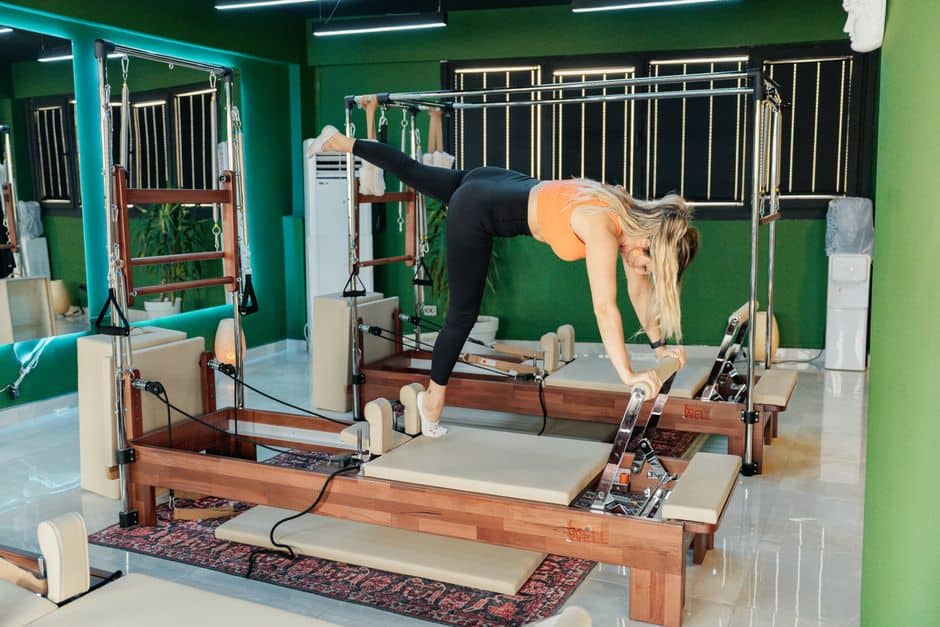
Most people who hire a trainer are not short on effort. They are short on attention. On a busy gym floor, attention is the scarcest resource in the room. Equipment is shared, conversations carry, and the clock keeps running while you wait for a bench or a cable station. A private studio removes those variables. The session becomes one person's session from start to finish, with a coach whose only job for that hour is you.
That distinction is why so many independent trainers and boutique studios describe themselves in exactly those terms. Personal training businesses in Boston, New York, Philadelphia, Charlotte, Portland, and Lakewood all lean on the same vocabulary: private, one-on-one, boutique, customized programming, a studio environment built around a single client at a time. The equipment is often not dramatically different from what you would find elsewhere. What changes is the setting, and the setting changes how the work gets done.
What a Private Studio Actually Is
A private studio is a training space that is not open to the general public during your session. Instead of a membership floor where dozens of people train independently, the room is used for scheduled one-on-one work. Some studios operate as a single room with one trainer and one client. Others host several independent trainers who each book their own clients into dedicated time slots, which is the model JT Training Studios describes, positioning itself as a home base for independent personal trainers, MAT practitioners, and fitness professionals to build their businesses.
The practical result is the same either way. When you arrive, the space is yours for the hour. Nobody is waiting on the machine you are using. Nobody is filming a set next to you. Your trainer is not scanning a crowded floor for their next client while finishing with you.
Privacy Is Not a Luxury Feature, It Is a Training Condition
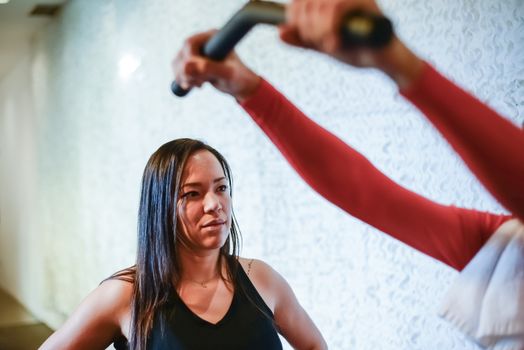
Privacy gets marketed as an amenity, but it functions more like a training condition. It changes what you are willing to attempt. Clients who feel watched tend to stay inside their comfort zone: lighter loads, familiar movements, no failed reps. In a private setting, the calculus flips. You can practice a lift that looks awkward the first few times. You can be coached through a movement pattern without an audience. You can ask the same question three times without embarrassment.
Studios such as Studio 16 in New York describe exactly this combination: elite trainers, fully private sessions, customized programming, and even control over your own music. TRAIN Fitness Studio in Boston compresses the pitch into three words on its homepage: privacy, accountability, and results. That order is not accidental. Privacy comes first because the other two depend on it.
The Real Differences Between a Studio Session and a Gym Floor Session
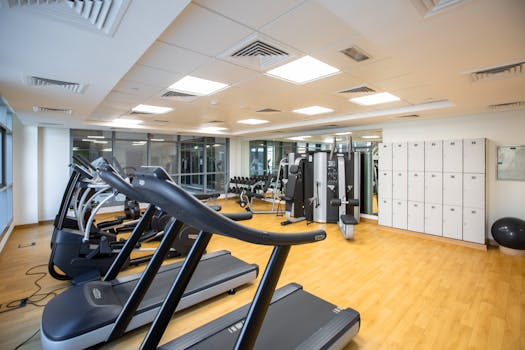
It helps to see the contrast in concrete terms. The table below reflects how private studios and shared gym floors typically differ, based on how studios themselves describe their offerings.
| Dimension | Shared gym floor | Private studio |
|---|---|---|
| Space | Shared with members training independently | Used for scheduled one-on-one sessions |
| Equipment access | Queues form at peak hours | Reserved for the session in progress |
| Sound and atmosphere | House music, announcements, surrounding conversation | Some studios let the client choose the music |
| Programming | Often self-directed or template based | Custom programs built by certified trainers |
| Attention | Split across a room | Directed at one client |
| Entry point | Membership signup | Consultation or a booked session |
Custom Programming Works Better in a Controlled Room
Certified trainers who work in studio settings typically build a custom fitness program around the individual rather than assigning a workout off the shelf. Studio Fitness in Lakewood describes its certified trainers creating custom fitness programs and providing nutritional counseling to support weight loss and strengthening goals, and notes that it trains clients of all ages and ability levels. That last part matters. A controlled room makes it far easier to scale a program up or down for a beginner, a returning athlete, or someone working around an old injury.
Assessment before assumption
Some studios go further and build measurement into the process. Revive, a private training studio, describes a system that pairs functional movement and sports performance drills with technology for analyzing body composition, with the stated goal of removing guesswork and pushing members past plateaus. You do not need a lab-grade setup to benefit from the principle. Baseline numbers, whether they come from body composition analysis or simply documented performance in key lifts, give a coach something to program against instead of programming on instinct.
Programming that extends beyond the session
Nutrition guidance shows up repeatedly in how studios describe their services, including at Revive and Studio Fitness. That is a signal that the studio model is not only about the hour on the floor. It is about the inputs that determine whether the hour produces a change. Behavioral routine building appears in the same category. Studio 1-on-1 in Charlotte describes itself as a boutique personal training studio focused on external and internal health along with behavioral routines, which points to habit work as a deliberate part of the offering rather than an afterthought.
Accountability Without an Audience
Accountability is easy to promise and harder to deliver. On a gym floor, accountability usually means a scheduled appointment and a trainer who finds you eventually. In a private studio, it means a booked time slot in a space that cannot be used by anyone else. The appointment has weight. Skipping it is not a matter of blending into a crowd and going unnoticed.
That structure tends to suit people whose schedules are already full. The Summit Personal Training Studios, which operates facilities in Philadelphia, pitches private one-on-one training in a luxury studio environment specifically for busy professionals who want custom fitness results. Compressing the workout into a focused, uninterrupted block is part of the value. You are not budgeting twenty extra minutes for equipment hunting or waiting on a squat rack.
Some studios extend that access beyond scheduled sessions. One personal training studio in Portland describes offering open gym access to its private studio outside of session times, along with member discounts for group fitness classes, yoga, and wellness services. That combination gives clients a private space to practice what they were coached on without reverting to a crowded floor.
Who Gets the Most From a Private Studio
The setting rewards certain situations more than others. Consider a private studio if any of the following sounds familiar.
- You are new to strength training and want to learn movement patterns without an audience.
- You have a demanding schedule and need sessions that start and finish on time.
- You have plateaued with self-directed training and want structured programming.
- You want nutritional guidance integrated with your training plan rather than handled separately.
- You prefer to train without noise, crowds, or competing for equipment.
- You want to rehearse technique in a controlled environment before adding load.
Beginners are often the biggest beneficiaries, largely because the learning curve is where people quit. Practicing in private removes the most common source of early discouragement. Experienced lifters benefit for a different reason: precision. Small technical adjustments are easier to coach and easier to feel when nothing else is competing for your focus.
What to Confirm Before You Book
Not every business that calls itself a private studio runs the same way. Ask a few direct questions before committing.
- Is the space exclusively mine during the session, or shared with other trainers and clients?
- Who holds the certification, and what is their background with clients like me?
- Does the program include an initial assessment, and how is progress measured?
- Is nutrition or habit coaching included, or is it billed or scheduled separately?
- What is the cancellation and rescheduling policy?
- Is there any access to the studio outside scheduled sessions?
Pricing, packages, and cancellation terms vary widely from studio to studio and are not standardized across the industry. Confirm those details directly with the business before you book, and get the answers in writing where possible.

Private Studio Training in Rhode Island
Marimar Prolific Performance provides private personal training, wellness coaching, and habit building for clients in Newport, Pawtucket, and the greater Providence area, including beginners who want a calm, focused setting to learn. The practice also offers online coaching for clients who travel or split their time between locations. Sessions are built around the individual rather than a group template, with the same concierge-level attention applied to both the fitness side of the practice and its business advisory work.
The setting is not a detail you tolerate on the way to results. It shapes what you are willing to try, how closely you can be coached, and how consistently you show up. A private room does not train for you, but it removes most of the reasons people stop.
Frequently Asked Questions
What is a private personal training studio?
It is a training space used for scheduled one-on-one sessions rather than open membership workouts. You are typically the only client in the room, or one of a small number booked into separate time slots. Studios often describe themselves as private or boutique, with certified trainers delivering customized programming instead of a shared class format.
Do I need experience to train in a private studio?
No. Studio-based trainers commonly work with clients of all ages and ability levels, including complete beginners. In fact, a private setting is often easier for newcomers because there is no audience while you learn movement patterns. The programming is scaled to your starting point rather than to a group average.
How is a studio session different from training on a gym floor?
The main differences are space, attention, and time. Equipment is reserved for your session instead of shared, your trainer's focus stays on you rather than the room, and you avoid waiting between sets. Some studios also let you choose the music and offer access to the space outside scheduled hours.
Does private studio training include nutrition guidance?
Often, but not always. Several studios describe pairing custom training programs with nutritional counseling, and some include behavioral routine work as part of the service. Ask whether nutrition support is included in your program or arranged separately, since this varies by business and is not standardized.
How do I choose between a private studio and a large gym?
Base it on what limits you. If crowds, noise, and equipment queues disrupt your training, or if you want closer technical coaching and structured programming, a private studio addresses those issues directly. If you mainly need equipment access and already train independently, a gym membership may cover it.