
Online fitness coaching looks simple from the outside. You pay someone, they send you a plan, you follow it, and results show up. The reality has more moving parts. Two people can sign up for programs that sound nearly identical and walk away with completely different outcomes, because the value sits in the relationship and the follow-through, not in the PDF.
Here is a clear look at what an online coach actually delivers, what the work looks like on your side of the screen, and how the pricing tends to shake out.
What Online Fitness Coaching Actually Is
Online fitness coaching is built on ongoing and continuous support, not just a stack of scheduled sessions that end when the clock runs out. If a client needs help between sessions, they can reach out. That single distinction separates coaching from buying a workout template off a shelf.
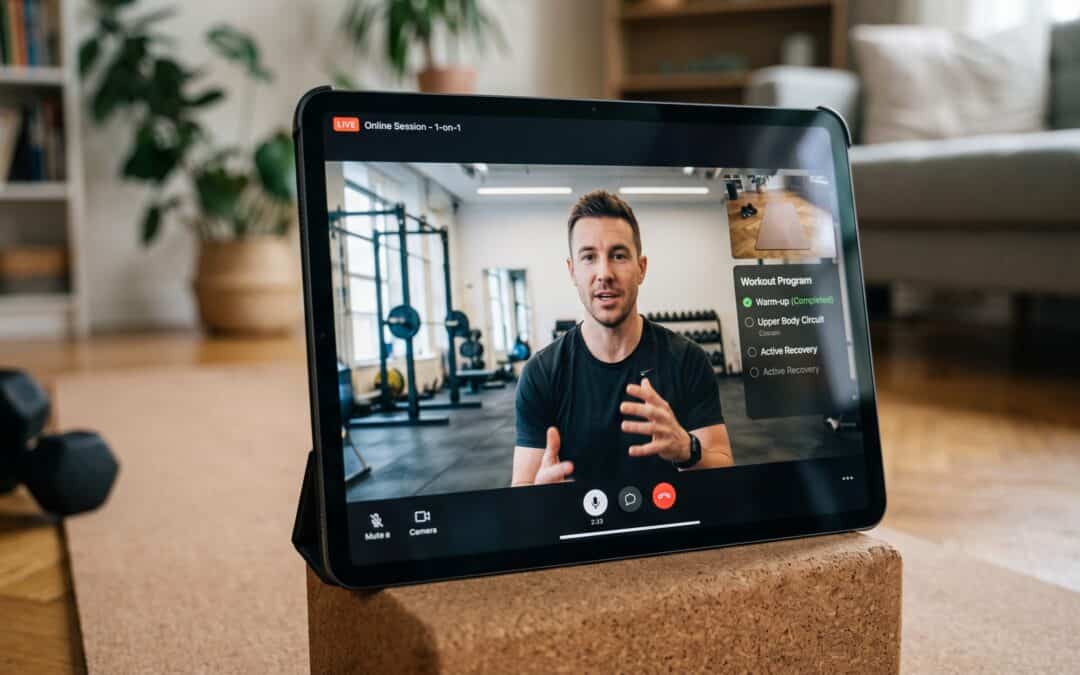
Delivery methods vary by coach and by client. Some providers run one-on-one sessions live over video tools such as Zoom, with no separate app required, which suits busy professionals who want a real person on the other side of the screen. Others work asynchronously, reviewing your training logs and check-in notes on their own schedule and responding with adjustments. Many do both, blending live video sessions with messaging support in between.
The common thread in well-built programs is a package of custom workout programming, consistent support, accountability, and nutrition guidance. Take any one of those pieces out and the experience gets noticeably thinner.
What You Get in an Online Coaching Program
A Plan Built Around Your Body and Schedule
Custom programming means the plan is written for you rather than copied from a generic template. Good coaches ask about your training history, injuries, available equipment, and how many days a week you can realistically train before they write anything. That intake conversation is where a lot of the value gets created, because a plan you cannot execute is worthless no matter how well designed it is.
Support Between Sessions
Continuous access to your coach is the defining feature of coaching rather than instruction. In practice this looks like messaging when a movement feels wrong, a quick answer when travel wrecks your week, or an adjustment when a lift stalls. Nerd Fitness describes its coaching model as pairing clients with a coach who learns their goals and what tends to get in the way, then providing continued support and guidance so the client gets the most out of their time and effort. That is a reasonable standard to expect from any coaching relationship.
Nutrition Guidance Alongside Training
Most established programs fold nutrition into the coaching rather than treating it as an add-on. This can range from general habit coaching to more detailed dietitian-led nutrition work. Some providers specifically structure personal training and nutrition coaching to be covered by insurance, which is worth asking about if cost is a concern.
Live Sessions or Asynchronous Check-Ins
Live video sessions give you real-time feedback on form and effort. Asynchronous check-ins give you flexibility and usually cost less. Neither is automatically better. The right choice depends on whether you need someone watching you move or someone keeping you honest from a distance.
Tracking Tools
Many coaches run their business on dedicated platforms built for personal trainers, coaches, and gym owners, where you log workouts, submit check-ins, and message your coach in one place. TrueCoach, one example of this type of software, offers trainers a free 14-day trial, which tells you something useful: the platform is the coach's tool, not the product you are buying. What you are paying for is the coach's judgment.
What You Do as the Client
Train and Log Consistently
Your coach can only adjust what they can see. If you complete three of five sessions and skip the notes, the programming gets built on bad information. Logging honestly, including the sessions that went badly, is what makes the next round of adjustments useful.
Communicate Before Problems Compound
Coaching support only works if you use it. Reaching out early when a joint hurts, a schedule changes, or motivation drops gives your coach room to adapt the plan. Waiting three weeks to mention it usually means three weeks of wasted training.
Give Feedback on the Plan
Tell your coach what felt too easy, too hard, or too long. A program that ignores your lived experience of it is just a spreadsheet. Specific feedback about time, energy, and difficulty makes the next version better.
Do the Unremarkable Work
Sleep, hydration, consistency across weeks, and showing up on the days you do not feel like it. No coach, online or in person, can do this part for you. This is the honest dividing line between people who get results and people who collect programs.
What Online Fitness Coaching Costs
Pricing spans a wide range because the offerings span a wide range. A few data points from the market give you something concrete to compare against.
| Pricing element | What the market shows |
|---|---|
| Monthly subscription coaching | Future advertises a first month at $50, then $199 per month for custom one-on-one personal training. |
| Coach-side salary benchmarks | Job listings for online fitness coach roles show a range of $70K to $100K, which reflects what experienced coaches can earn and indirectly what clients pay for their time. |
| Insurance-covered options | Some providers build personal training and nutrition coaching around insurance coverage, which can change your out-of-pocket math significantly. |
| Software costs | Platforms such as TrueCoach offer a 14-day free trial for trainers, meaning software is a small part of what your fee covers. |
Treat any figure here as a starting reference point rather than a rule. Actual pricing depends on session frequency, whether sessions are live or asynchronous, whether nutrition is included, and how much direct access you get. Ask any coach you are considering for their current rates in writing before you commit, since published examples age quickly and packages change.
What Actually Drives the Price Up
Live one-on-one video sessions cost more than asynchronous check-ins because they consume scheduled hours. Detailed nutrition work, frequent check-in cadence, and direct messaging access all push pricing higher. If a quote seems unusually low for a full-service offer, ask what is included, because the difference is usually frequency or access rather than quality of expertise.
Why the Online Coaching Market Feels Crowded
Search any personal training forum and you will find trainers asking how to stand out, because the number of online programs and online personal trainers has grown enormously. Dozens of comparison roundups exist now, with outlets like Garage Gym Reviews publishing tested lists of the best online personal trainers.
That volume is a mixed blessing. More choice means more chances to find a genuine fit. It also means more marketing, more template resold as coaching, and more noise to filter. The saturation is at the entry level, where almost anyone can launch a program, not at the level of coaches with real systems, real accountability, and clients who stick around for years.
Questions Worth Asking Before You Commit
- What exactly is included each month, and how often will we actually communicate?
- Are sessions live or asynchronous, and how many of each?
- Who writes my program, and how often does it get adjusted?
- Is nutrition included, and at what level of detail?
- What happens if I get injured, travel, or fall behind?
- Can I see the platform or app before I pay?
- What is the cancellation policy?
- Do you work with insurance for any part of this?
Ask these before money changes hands. A coach who answers clearly and welcomes the questions is usually a coach who has done this for a while.
Online Coaching in Rhode Island and Beyond
Location matters less than it used to. Live video sessions, messaging support, and cloud-based training platforms mean a client in Newport, Pawtucket, or Providence can work with a coach based anywhere, and a coach based in Rhode Island can serve clients well outside the state.
Marimar Prolific Performance operates on that model, offering private personal training across in-person, concierge, and online formats along with wellness coaching and habit building. For clients who want the structure of a live coach without adding a commute, the online format delivers the same personalized attention in a different container. For those who want hands-on coaching in the room, in-person sessions remain available. The format is a logistics decision. The coaching quality is what determines results.
Frequently Asked Questions
How much does it cost to have an online fitness coach?
Costs vary widely by format and frequency. One published market example, Future, advertises a first month at $50 followed by $199 per month for custom one-on-one personal training. Job listings for online fitness coach roles show a $70K to $100K range, which reflects the expertise behind higher-priced programs. Always confirm current rates directly with the coach before enrolling, since published prices change often.
Is an online fitness coach worth the money?
It depends on whether you use the support. Coaching includes ongoing access between sessions, custom programming, accountability, and nutrition guidance in most established programs. If you will actually log your training, attend check-ins, and communicate honestly, the structure pays off. If you want a plan to follow without interaction, a cheaper program may suit you better.
What does a typical week of online coaching look like?
Most clients train on their own schedule using a custom plan, then submit check-ins through a coaching platform. Depending on the arrangement, you may also have one or more live video sessions over a tool like Zoom, plus messaging access for questions that come up mid-week. Frequency of contact is usually the main difference between price tiers.
Should I choose online coaching or in-person training?
Choose in-person if you want hands-on form correction, equipment access, and a scheduled appointment you cannot easily skip. Choose online if travel, a packed calendar, or a lack of local availability makes in-person sessions unrealistic. Many people do better with a blend, using live video for accountability and self-directed sessions the rest of the week.
Whichever route you take, the questions to ask are the same: what is included, how often will you hear from your coach, and what happens when life interrupts the plan. Get clear answers on those three points and you will know far more about a program than any homepage will tell you.