
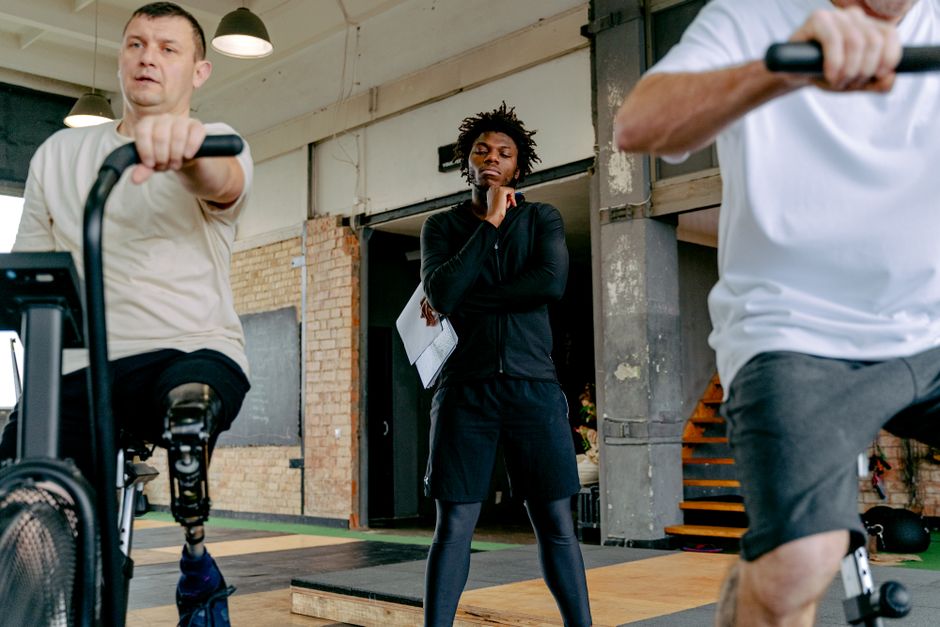
Hiring a personal trainer is a decision people usually make twice: once when they pick a name, and again when they realize the fit is wrong. The second decision costs far more in time, money, and momentum. A better approach is to slow down before the first payment and ask a short set of pointed questions.
Pawtucket has no shortage of options. Rhode Island offers personal trainers for in-person, at-home, and online sessions, with choices in Pawtucket, Newport, Cranston, and beyond. That variety is good news, but it also means the difference between two trainers can be enormous. These are the questions that reveal it quickly.
Name the Outcome Before You Compare Anyone
Training is a tool, not a destination. The right format depends on what you actually want. Weight loss, muscle gain, and general health are broad goals, and each splits into smaller, more useful targets: get through a full workday without back pain, add real strength to a squat, build a walking habit that survives a busy month, or return to activity after a long break.
Write that outcome down in one sentence before you start looking. A trainer who specializes in strength for experienced lifters may be the wrong person to guide a beginner through his or her first six months. A coach who is excellent with group energy may not be the best fit for someone who needs quiet, private attention. Knowing your target narrows the field faster than any review site.
The Formats You Will See Locally
Pawtucket and the surrounding Rhode Island area cover the full range of training formats. Each one solves a different problem, and none is universally better than the others.
| Format | What it looks like | Typically suits |
|---|---|---|
| One-on-one gym training | A single coach and a single client, working on individualized programming inside a facility | People who want undivided attention and direct form correction |
| Coached small-group or functional training | Certified coach-led sessions built around strength, conditioning, and functional movement | People motivated by a shared schedule and group energy |
| In-home or mobile training | A trainer brings the workout to your home, with equipment and programming adjusted to the space | Busy schedules, privacy, and beginners who want to start at home |
| Online coaching | Remote programming and check-ins with video or written feedback | Frequent travelers and self-directed clients who still want structure |
You can also mix formats. Someone might train privately in person twice a month and follow a written program the rest of the time. Ask any trainer whether hybrid arrangements are possible, and get the answer in writing so both sides understand what is covered.
Questions About Credentials and Safety
This is the part people skip, usually out of politeness. Do not skip it. A certification is a baseline, not a personality trait, and asking about it is completely normal.
- Which certification do you hold, and who issued it? Trainer bios in the Providence area list credentials such as the Certified Strength and Conditioning Specialist designation from the National Strength and Conditioning Association, alongside degrees in exercise physiology. The issuing body matters, because standards differ. Verify any certification with the organization that grants it.
- Do you hold current CPR and first aid training? A working trainer should be able to answer immediately.
- Are you insured? Independent trainers and small studios should carry liability coverage.
- What is your education or background? Formal study is not required to be a good coach, but it tells you how they think about the body.
- How do you screen a new client before the first workout? Look for a health history intake, a conversation about injuries and limitations, and a movement assessment.
If a trainer cannot name a certifying organization, treats the question as an insult, or promises results with no assessment, that is your answer. Move on.

Questions About Programming
A trainer's real product is the plan behind each session. Ask how that plan is built.
- How will the first four weeks be structured, and what will change after that?
- How do you decide when to add weight, add reps, or back off?
- Do you program differently for each client, or does everyone follow a similar template?
- How do you work around a nagging shoulder, knee, or lower back?
- What do sessions look like on days when I am tired or short on time?
- Is a warm-up and mobility work included in the hour, or is that on my own time?
Listen for specifics. A confident coach can describe the structure of a typical week without reading from notes, and can explain why a given exercise is in the program. Vague answers about "muscle confusion" or "keeping the body guessing" are a signal that the programming is being improvised session by session.
Questions About Measuring Progress
Feeling better is real progress, but it is hard to manage. Ask how the trainer tracks it.
Good questions include: what will be different in eight weeks, how will we know, and what do you track along the way? Reasonable answers involve strength numbers on key lifts, measurements, photos, session notes, a training log, or a simple performance test repeated every few weeks. Ask how often you will review the plan together, and what happens if progress stalls for a month. A trainer with a review process will answer easily. One who only counts sessions may not.

Questions About Money, Time, and Communication
Rates vary widely by format, location, and level of service, and a reputable trainer will spell out the cost in writing. Ask for a full breakdown rather than a single number.
- What exactly does the fee cover: session time, program design, check-ins, messaging, or app access?
- What is the cancellation and rescheduling policy?
- How far ahead do I need to book, and how often are your regular slots available?
- How do I reach you between sessions, and what response time should I expect?
- Is there a minimum commitment, and how do I end the arrangement if it is not working?
Get the answers before you pay. A clear cancellation policy protects both people, and a trainer who is vague about terms now will be vague about them later.
What to Watch in a First Session
A trial session or consultation tells you more than any interview. Notice whether the trainer asks about your history before loading you with anything heavy. Watch whether they actually observe you move, or simply count reps while looking elsewhere. Pay attention to how they correct form: clear instruction and adjustment feel different from criticism. Ask why a movement was chosen and see if the explanation makes sense to you.
You should leave with a clear idea of the next session and the next month. If the first hour is a hard workout with no explanation and no plan, that coach is selling effort, not coaching.
Red Flags Worth Taking Seriously
- Guaranteed results with a specific number attached to a specific date.
- No health screening before the first workout.
- Reluctance to name a certification or insurance provider.
- Pressure to sign a long contract on the spot.
- Dismissing pain as something to push through.
- Sessions that never change, regardless of how you feel or perform.
Any single item on this list is a reason to ask a direct follow-up question. Two or more is a reason to keep looking.

A Shortlist for Your First Conversation
If you only have five minutes with a candidate trainer, ask these: which certification do you hold and who issued it, how will the first month of programming be built for me, how do you track progress, what is your cancellation policy, and what do you do when a client's pain flares up? The answers will tell you how the person thinks, how organized the business is, and whether the relationship will hold up over months rather than weeks.
The best personal trainer in Pawtucket for you is not the one with the loudest marketing. It is the one who asks as many questions as you do, explains the reasoning behind the plan, and puts the terms in writing. Take the extra week to compare two or three. It is the cheapest insurance you will ever buy on your own results.
Frequently Asked Questions
How much does a personal trainer in Pawtucket cost?
Rates depend on format, session length, and how much support is included outside the session, so there is no single local number to quote. Ask each trainer for a written breakdown covering sessions, programming, and check-ins. Compare the total monthly commitment rather than the per-session price, since some arrangements bundle more support than others.
Do I need to be in shape before hiring a trainer?
No. Beginners are a normal client group, and a competent trainer will assess your starting point and build from there. What matters is being honest about your history, current activity level, and any injuries or medical conditions. A trainer who expects you to arrive already fit is telling you something useful about how they work.
Can I train at home in Pawtucket instead of a gym?
Yes. Rhode Island has trainers who serve clients in person at a facility, at home, and online, and mobile training services operate in the area. Home training can work well with minimal equipment, provided the trainer is comfortable programming around the space you have. Confirm travel coverage and any equipment requirements before booking.
How often should I meet with a personal trainer?
Frequency depends on your goal, budget, and how much structure you need between sessions. Some clients train with a coach once a week and follow a written program alone the rest of the time. Others prefer two or three coached sessions. Ask the trainer what they recommend for your specific situation and why.
What should I ask about a trainer's certification?
Ask which credential they hold and which organization issued it, then verify it with that organization. Also ask about CPR and first aid training and liability insurance. Local trainer bios commonly list credentials such as the Certified Strength and Conditioning Specialist designation and CPR certification, which gives you a useful benchmark for what to expect.