
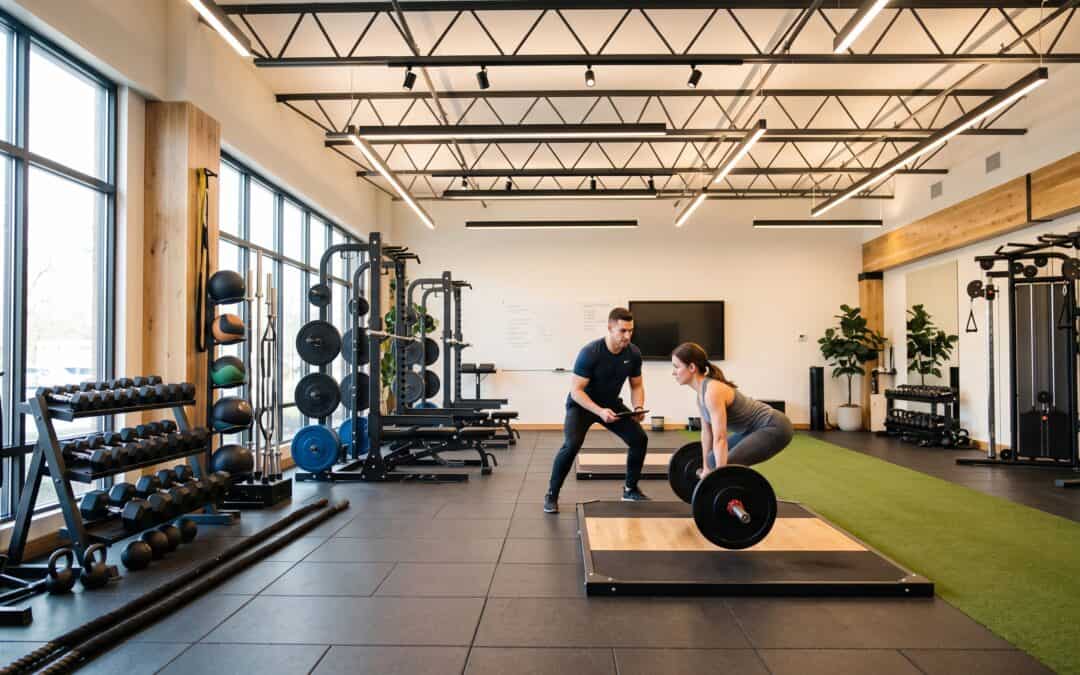
Most people who hire a trainer assume the hard part is finding the right coach. The setting carries just as much weight. A private gym for personal training removes the crowd, the wait for equipment, and the background noise that quietly turns a planned 60 minute session into a hurried 40 minute workout. What replaces it is a controlled room where the hour actually serves the program you paid for.
That shift shows up in three places at once: the space you train in, the equipment you can use without negotiating for it, and the quality of attention that holds from warm-up through the final set.
What Makes a Gym Private in the First Place
The word private gets stretched thin in fitness marketing. In practice, it usually describes a facility built around appointment-only access rather than open memberships. You book a time, you arrive, and the room belongs to your session for that window.
Some facilities take the idea further with individual training suites, where each trainer and client work behind their own door. Others operate as a single open floor with one or two clients training at a time. Both models share the same core promise: nobody queuing for the squat rack, no shared locker room bottleneck, no audience for your first attempt at a new lift.
One appointment-only facility in the Philadelphia area describes itself as a 4,000 square foot space where one trainer works with one client at a time, with no memberships, no crowds, and no waiting. That captures the category well, even though the size, layout, and setup of each studio varies considerably from one operator to the next.
The Space Advantage: Room to Move and Room to Think
Square footage in a commercial gym is shared square footage. The same floor area in a private studio belongs to one session. The difference becomes obvious within the first ten minutes.
- Warm-ups happen without scouting for open floor.
- Circuit work stays in one zone instead of scattering across the building.
- Coaching cues land without competing against overhead music and machine hum.
- Rest periods stay rest periods instead of turning into equipment searches.
Layout matters more than raw size. A well-planned studio keeps free weights, racks, and mat space within sight of each other so transitions take seconds. A poorly planned one forces a walk across the room between every exercise, and those small walks add up across a twelve-week program.
Why the room feels different
Atmosphere is not a soft extra. A clean, exclusive environment, with details like towel service and control over your own music, changes how willing you are to push into uncomfortable work. When the room is calm and reserved for you, the session feels like an appointment rather than a crowd experience. That alone tends to improve attendance, and attendance is what drives results.
Equipment That Fits Your Program, Not the Membership Base
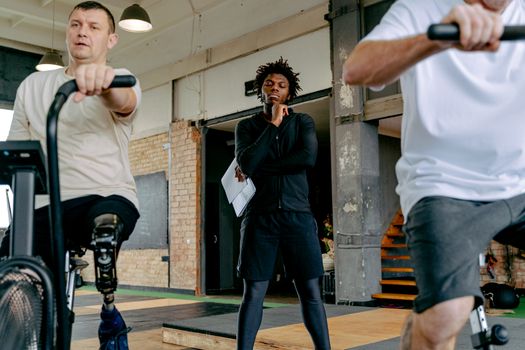
Commercial gyms stock equipment for thousands of unknown users across every training style imaginable. Private studios stock equipment for a narrower kind of work. That usually means a tighter, higher-quality selection: racks, barbells, plates, dumbbells across a full range, benches, cable stations, mat or turf space, and often specialized tools for mobility or rehabilitation.
The real question is not how much equipment exists. It is whether the equipment supports what your program requires. A strength-focused plan and a return-from-injury plan need different tools, and a studio built for one-on-one work can usually be arranged around either.
| Training goal | Equipment to confirm | Why it matters |
|---|---|---|
| Strength and progressive overload | Racks, barbells, plates, full dumbbell range | Lets the plan load gradually without hunting for matching weights |
| General fitness and fat loss | Cables, benches, mat or turf space, lighter dumbbells | Keeps circuits moving in one zone with minimal transition time |
| Training around injuries | Open floor, bands, adjustable benches, mobility tools | Makes substitutions and scaled movements possible mid-session |
| Conditioning and athletic work | Sleds, turf, open space, free weights | Supports interval work without crossing a busy gym floor |
| Mobility and recovery | Mats, rollers, stretching space, quiet area | Keeps the cool-down as part of the session rather than an afterthought |
Focus: The Part of a Session That Is Hardest to Buy Elsewhere
Focus is the least visible benefit of private training and often the most valuable one. In a crowded gym, attention splits constantly. You watch for an open bench. You adjust the volume around what is available. Your trainer manages logistics on your behalf instead of watching movement.
In a private setting, that overhead disappears. The trainer watches the rep, not the room. You hear a correction on the first repetition instead of the fifth. Sets move at the pace the program intended, and the session ends when the work is done rather than when a machine finally frees up.
Training around injuries and physical limits
Private studios make it easier to modify a session in real time. If a movement produces pain, the trainer can swap it on the spot without leaving you standing idle in the middle of a busy floor. Programs that combine weight loss, strength, and safe training around injuries depend on that flexibility. Many individualized programs are also structured around a fixed block of sessions per week, so progress can be measured over weeks instead of guessed at session by session.
Private Gym vs. Traditional Gym: A Side-by-Side Look
Neither setting is automatically better. The useful comparison is about what each one gives you access to during the hour you have carved out of your day.
| Factor | Private studio | Traditional gym |
|---|---|---|
| Access model | Appointment-only, booked in advance | Open access or membership based |
| Crowds | Typically one client or a small number at once | Varies widely with peak hours |
| Equipment availability | Reserved for your session | Shared, first come first served |
| Trainer attention | Focused on a single client | Often split across groups or a floor |
| Session pacing | Set by the program | Affected by waiting and turnover |
| Environment | Quieter, controlled, often amenity-focused | Higher energy, more background noise |
How to Evaluate a Private Gym Before You Book
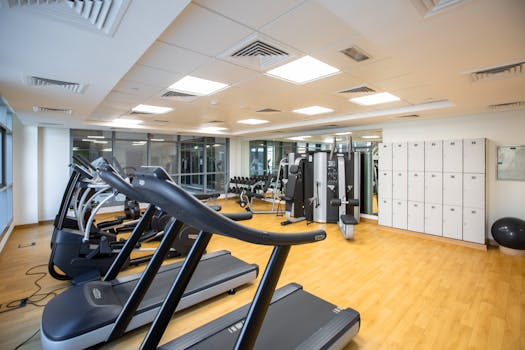
Ask these questions before committing to a block of sessions. The answers tell you more than any photo on a website.
- Ask about the access model. Confirm whether the facility is appointment-only or whether other clients may be training at the same time.
- Walk the floor in person. Look at the layout and ask how many people share the space at peak.
- Match equipment to your program. Bring your training goal and ask the trainer to walk you through the tools you will actually use.
- Ask who else will be in the room. For some clients, privacy is the entire reason for choosing a studio.
- Ask what is included beyond the workout. Amenities such as towel service, showers, or recovery options vary by studio.
- Confirm the practical terms in writing, including session length, rescheduling, and what happens if you travel or get sick.
- Ask about pricing directly. Rates differ by market, session length, and whether the trainer travels to you. Compare cost per hour, not the headline number.
What Private Training Looks Like in Rhode Island
For clients in Newport, Pawtucket, Providence, and the surrounding communities, the appeal of a private studio is practical rather than aspirational. Traffic and schedule pressure make a wasted hour genuinely expensive. An appointment-only setting means you arrive, train, and leave without losing time to parking-lot laps or a queue for the one working cable machine.
Sessions are typically built around a dedicated trainer, a customized plan, and a studio space reserved for the work. Concierge and in-home options suit clients who prefer to train at home, and online coaching covers weeks when travel or weather makes an in-person session impractical. Confirm the specific services, availability, and terms directly with the provider, since offerings differ from one studio to the next.

Matching the Setting to Your Goals
Private studio training tends to fit three kinds of clients particularly well. Beginners benefit because every movement is coached from the start, which reduces the odds of building early habits around poor form. Experienced lifters benefit because the equipment is available when they need it and the plan does not bend around peak hours. Busy professionals benefit because the appointment structure removes decisions: you show up, you train, you leave.
If your main obstacle is consistency or not knowing what to do next, coaching and a reserved space solve more of the problem than a larger facility would. If you already train well on your own and simply need access to equipment, a standard membership may be the more efficient choice. Either way, ask about pricing, session structure, and cancellation terms before you commit, because those details determine whether the arrangement actually holds up over months rather than weeks.
Frequently Asked Questions
How much does private gym personal training cost?
Pricing varies widely by city, session length, and whether the trainer travels to you. Studios rarely publish identical rates because the cost of space, equipment, and trainer time differs from one market to the next. Ask for a full breakdown, including whether single sessions, packages, or introductory blocks are available, then compare the total cost per hour rather than the headline number.
Do I need experience to train in a private gym?
No. Private studios tend to suit beginners well because the entire session is coached and the environment stays calm. There is no pressure to keep pace with strangers or figure out machines alone. A good trainer starts with a movement assessment, builds a plan around your current capacity, and progresses the work as your strength and confidence grow.
Can a private gym accommodate injuries or physical limitations?
Often yes, and that flexibility is one of the main reasons people choose private training. Because the trainer controls the room and the equipment, movements can be modified, substituted, or slowed down on the spot. Bring any medical guidance or restrictions to the first session, and confirm the trainer has experience with your specific situation before booking a block.
Is private training worth it compared with a standard gym membership?
It depends on what you are buying. A membership buys access to equipment and a facility. Private training buys coaching, a reserved space, and a program built for you. If your main obstacle is not knowing what to do or struggling to stay consistent, coaching is usually the deciding factor. If you already train well independently, a membership may be enough.
How often should I train with a private trainer?
Frequency depends on your goals, schedule, and recovery. Some clients train two or three times per week, while others use private sessions to learn a program and then train independently between appointments. Ask your trainer to outline a realistic weekly structure and a date for reviewing progress, so the plan stays accountable rather than open-ended.