
A private personal training studio promises something a crowded gym floor rarely delivers: undivided attention. One trainer, one client, a plan built around a specific body and a specific schedule. That promise is also easy to make and harder to keep, which is why the questions you ask before your first session matter as much as the workout itself.
Studios around the country market themselves in nearly identical language. They advertise private one-on-one sessions, certified trainers, customized programming, and a space that feels more like a clinic than a commercial gym. Some add yoga, small group classes, red light therapy, or nutrition support. The words on a website look the same from one studio to the next, so the deciding details live in how a studio actually operates day to day.
Here is what to examine before you hand over a card.
Decide Which Format You Want First
Private covers more ground than most people expect. The options you will run into include:
- One-on-one sessions in a dedicated studio space
- Semi-private sessions, where two or three clients train alongside one coach
- Concierge training, where a trainer travels to your home or building
- Virtual sessions delivered over video
- Hybrid arrangements that mix in-person and remote coaching
None of these is automatically better. A semi-private session may suit someone who stays motivated around other people, while a fully private room suits someone who would rather be seen by no one but the trainer. Knowing which one you actually want keeps you from paying for privacy you do not need or accepting an audience you never wanted.
The First Session Should Begin With an Assessment
Strong studios treat the first meeting as fact-finding rather than a workout. That often includes a conversation about goals, a movement or posture screen, and some form of body composition analysis. Some studios use technology to track that data over time, then build programming from what it shows rather than from a template.
Ask what the initial session looks like. If the answer is a vague promise to get you moving, you have learned something useful. An assessment creates the baseline that later progress gets measured against. Without one, nobody can tell you whether the plan is working.
Ask Who Will Actually Train You
The trainer featured on a studio’s website is not always the person who shows up for your Tuesday session. Before booking, confirm who your trainer will be, whether that assignment is stable, and what happens when they are sick or traveling.
Then ask about qualifications. Personal training is a certification-driven field, and good studios will tell you plainly where their trainers are credentialed and how long they have been coaching. Some also mention specialty work in areas such as prenatal and postnatal training, mobility, or athletic performance. You are not being difficult by asking. You are doing the same thing you would do before hiring anyone else to work on your body.
Custom Programming Versus a Recycled Workout
The phrase customized plan gets used loosely. In practice, a genuinely customized program reflects your injury history, your current capacity, your comfort with various equipment, and what you want to be able to do six months from now.
Two questions separate real customization from a marketing line. First, how often does the plan get revised, and what triggers a revision? Second, how do you track progress beyond how you happen to feel that week? A studio that can answer both without hesitation is running a process rather than improvising each session.
Look at the Space Itself
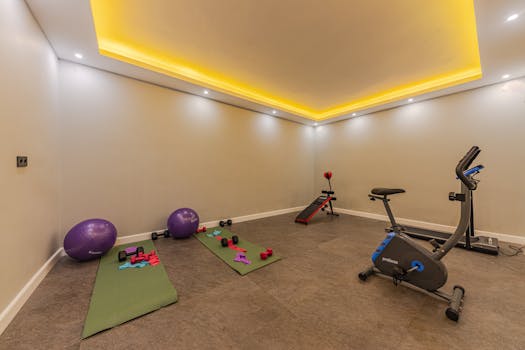
Private studios tend to be smaller than commercial gyms by design, and that constraint shapes the experience. Things to notice during a walkthrough or trial session:
- How many clients train at once, and whether the room feels crowded
- Whether equipment is maintained and appropriate for your goals, not just plentiful
- Whether there is a dedicated area for changing, stretching, or assessment
- Cleanliness, ventilation, and general upkeep
If a studio invites you to tour before committing, take them up on it. A room tells you more in ten minutes than a photo gallery tells you in ten pages.
Accountability Between Sessions
Training twice a week leaves a lot of hours unaccounted for. The studios that produce results usually have a system for the rest of the week: check-ins, habit goals, nutrition guidance, or a written program you can follow on your own.
Ask how communication works between sessions, how quickly questions get answered, and whether virtual sessions are available when travel or a scheduling conflict interrupts your routine. For anyone with a demanding calendar, flexibility is not a bonus feature. It is the difference between a program you finish and one you abandon in week four.
Location, Timing, and the Logistics You Will Live With
Consistency decides outcomes, and consistency is largely a scheduling problem. A studio that takes thirty minutes to reach may be perfect in theory and impossible on a Tuesday afternoon. Clients around Providence, Pawtucket, and Newport deal with different traffic realities, so weigh commute time honestly against the shape of your week.
Ask about session lengths, the earliest and latest available times, how far in advance you need to book, and what the cancellation policy says. Policies vary widely between studios, so get the specifics in writing from the studio rather than assuming any standard. A program you can actually attend beats a better program you cannot.
Questions Worth Asking Before You Book
- What happens in the first session, and is there an assessment?
- Who will my trainer be, and how consistent is that assignment?
- What certifications and experience does that trainer hold?
- How is my program built, and how often is it updated?
- How do you measure progress?
- How many clients train in the studio at one time?
- What is the cancellation and rescheduling policy?
- Is there a trial session, consultation, or complimentary first appointment?
- Do you offer virtual or hybrid options if my schedule changes?
- What does support between sessions look like?
Signals That Should Slow You Down
Most of what you need to know shows up in how a studio answers questions. Take note if you run into any of the following:
- Pressure to commit to a large package before you have met a trainer or seen the space
- No clear answer about who your trainer is or what their credentials are
- No assessment, screening, or goal-setting step before training begins
- Vague or shifting answers about pricing and what is included
- An inability to explain how progress will be tracked
- A room that feels overcrowded or poorly maintained during peak hours
None of these is automatically disqualifying, but each one deserves a direct question and a straightforward answer before money changes hands.
Use the Trial Session as a Real Test
Many private studios offer a complimentary session or a free consultation, and that appointment is more than a sales visit. Pay attention to whether the trainer listens more than they talk, whether cues are clear, and whether the session matches the plan you discussed rather than a generic circuit they run for everyone.
You are also evaluating fit. A qualified trainer whose style grates on you will not last past month two, no matter how good the programming looks on paper. Trust your read of the room.
Frequently Asked Questions
How much does private personal training cost?
Rates vary by market, studio, session length, and whether you train one-on-one or semi-private, so no single number applies everywhere. Ask the studio directly for its current pricing and what a package includes, then compare that against the frequency you can realistically sustain. A trainer who explains the structure clearly is much easier to evaluate than one who avoids the subject.
What should I expect in my first session?
Expect conversation before exercise. A well-run first appointment typically covers your goals, health history, and past injuries, plus some form of movement or body composition assessment. Training may follow, but the purpose is gathering information. If a studio skips that step entirely, ask why, because the baseline is what later progress gets measured against.
Are online sessions as effective as in-person training?
Online coaching can work well for clients with heavy travel schedules or limited studio access, and many studios now offer virtual sessions alongside in-person ones. The trade-offs are hands-on cueing and equipment access. For beginners, in-person sessions usually make more sense early on. For experienced clients maintaining a program, remote coaching often holds up well.
How do I know if a trainer is qualified?
Ask directly about certifications, years of coaching experience, and any specialty work relevant to your situation, such as prenatal and postnatal training. Reputable studios answer these questions without hesitation and can tell you exactly who will be assigned to you. If the response is evasive, or a trainer’s background is never discussed at all, treat that as a reason to keep looking.
How often should I train with a private trainer?
Frequency depends on your goals, your budget, and how much you will do on your own. Some clients train two or three times a week, while others use one supervised session and follow a written plan for the rest of the week. Ask the studio what it recommends for someone in your situation and whether hybrid arrangements are available so your schedule can flex without losing progress.