

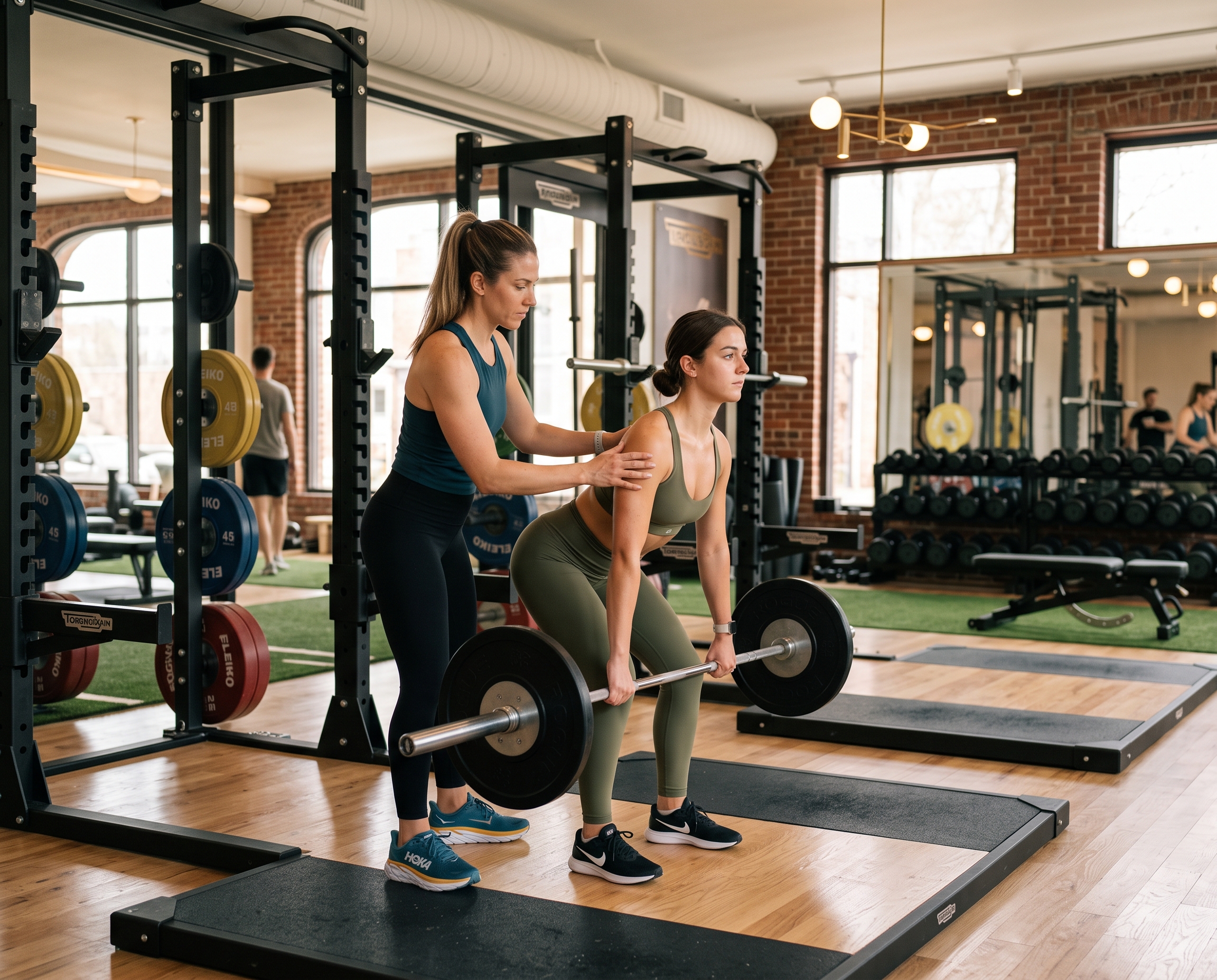
Most gyms sell training by the half hour and pair you with whoever happens to be on shift. Private personal training works the other way. One coach, one client, and a program built around a specific person's body, calendar, and goals. In Rhode Island, that model shows up most often among professionals and business owners around Providence, Pawtucket, and Newport who protect a small number of hours each week and need those hours to produce something.
What Private Really Means in Personal Training
The word private gets used loosely, so it helps to define it. A private session is not shared. There is no rotating group, no waiting on equipment, and no programming written for an average of eight different people. It is one trainer and one client for the length of the appointment.
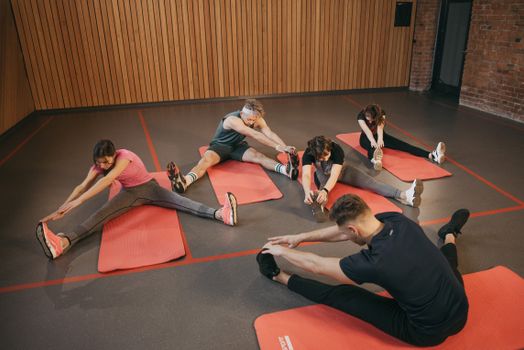
The alternative is small group training, which many facilities offer alongside one-on-one work. Small group can suit someone on a fixed schedule who enjoys company while training. It is a different product. In a private session, a coach can change a movement, a load, or a cue in real time. That matters more when a client is returning from an injury, learning a lift from scratch, or working around a limitation that a group format cannot accommodate.
Facilities that run both models tend to describe the private option as the most personalized route to a goal. One national gym chain frames it simply: a training session is the fastest, most personalized way to reach your goals, without the guesswork. That phrasing points at the real value. A private client is not buying access to equipment. They are buying decisions made on their behalf.
The Concierge Element: Scheduling and Access
Premium private training usually includes a layer that has nothing to do with sets and reps, and it is scheduling. Studios built around private clients often allow those clients to manage sessions at their convenience, which sounds minor until a busy quarter hits and a standing appointment becomes the first thing to fall apart.
Some private studios also give clients access to the space outside scheduled sessions, so they can train independently between coached appointments. That combination of guided work plus open access fits people who want more volume than one or two weekly sessions but do not want to be walked through every movement.
Concierge training is also the model most likely to travel. A coach working with a small roster can meet a client at a home gym, a private studio, or a hotel when business travel disrupts the routine. The tradeoff is capacity. A trainer who keeps a genuinely private client list cannot take unlimited bookings, so availability is usually the first question worth asking.

What a Premium One-on-One Session Includes
The skeleton of a well-run session looks similar from market to market, even when the branding differs. What changes is the depth of each piece.
-
A short review of how the client has felt since the previous appointment, including sleep, soreness, and anything that has started to ache.
-
A warm-up selected for that day's work rather than a generic routine run on autopilot.
-
Coaching cues delivered in the moment, the kind of instruction that separates a productive session from supervised exercise.
-
Load and volume adjustments made on the spot based on how the client is moving that day.
-
A close with notes on what to do between sessions, and what to leave alone.
The last item is where private coaching earns its keep. Coaches working with clients toward conditioning goals may track measurements over time, and a trainer who records numbers across months can show progress even when the mirror is slow to cooperate.
What One-on-One Training Costs, and Why the Range Is Wide
Published rates from other parts of the country show how broad the spread can be. These are not Rhode Island prices, and local rates should be confirmed directly with the trainer, but they illustrate what moves the number.
Example listing | Published rate | What it signals |
|---|---|---|
Private studio, Portland | 60 minute private one-on-one session at $90.00 | Studio time priced per session |
Trainer profile, Los Angeles | 1-on-1 training from $119 per session | Market premium for a named coach |
Trainer marketplace, Phoenix | Between $35 and $90 per hour | The full range of a metro market |
Three factors push a rate up or down. The first is the coach. A trainer with a full client list, a specialty, and a track record charges more than a newer trainer on a commercial gym floor. The second is the setting, since a private studio with controlled access carries different overhead than a large fitness floor. The third is what the price includes. Assessment, program design, messaging between sessions, and travel all take time, and that time has to be accounted for somewhere in the agreement.
Assessment and Programming: The Part Beginners Underestimate
Good personal training starts with a custom program built around a client's fitness level, goals, schedule, and lifestyle. Those four inputs matter more than any single exercise choice. A program that ignores a client's travel schedule is a program that gets abandoned in month two.
Trainers describe their specialties in wide terms, from powerlifting to marathon preparation, and the assessment is where the specialty gets applied to an actual person. A beginner and a returning lifter may receive the same movement on paper and a completely different dose of it in practice.
Assessment also sets the safety baseline. Coaches working with clients who want to build strength, improve technique, and prevent injury need to know what a client's joints have been through before loading anything heavy. That conversation is worth having before the first session, not after.
Who Chooses Private Personal Training in Rhode Island
The clients who seek out private coaching tend to share a profile rather than a fitness level. They are adults with crowded calendars, often professionals or business owners, and they are frequently beginners who have never trained with a coach before.
Their goals are ordinary and specific: fat loss, strength, muscle gain, support during rehabilitation, or simply improving daily quality of life. The common thread is not athletic ambition. It is a person who has decided that the hours they spend training should be efficient, supervised, and adjusted to them rather than to a room.
Online Coaching and In-Person Sessions
Private coaching does not have to happen in the same room. Online program design and remote check-ins can carry the structure, the progression, and the accountability, which is often enough for someone who already knows how to move and mainly needs a plan and a person expecting updates.
In-person sessions carry what a screen cannot. A coach standing next to a client can see a knee drift, hear a breath pattern, and correct a setup before a rep turns into a strain. For technique-heavy work, heavy loading, or rehabilitation support, that proximity is hard to replace.
Many private clients land on a hybrid. Coached sessions anchor the week, and remote programming covers the days in between. The right split depends on how much supervision the client actually needs, which is a question a good trainer will answer honestly even when the honest answer means fewer booked sessions.

How to Evaluate a Private Trainer Before You Commit
Credentials are the starting filter. One national chain describes NCCA-accredited certification as the gold standard in exercise science, and reputable trainers pair that baseline with ongoing education and in-house training. Beyond the certificate, ask about the specific work.
-
Which certifications the trainer holds and when they were last renewed.
-
How many clients they currently train privately, which tells you their capacity and attention.
-
What the first month looks like, including assessment and program design.
-
How communication works between sessions.
-
What the cancellation and rescheduling terms are, in writing.
A trial session answers more than a conversation will. Watch whether the trainer asks questions before prescribing anything, and whether the cues make sense to you in plain language. Premium coaching should feel like attention, not performance.
Frequently Asked Questions
Is private personal training worth the cost?
It depends on what you are replacing. Private training costs more per hour than a gym membership, but the session includes assessment, programming, and real-time correction that a general membership does not. For a beginner, someone returning from injury, or a person with very little time, the efficiency is the point. Anyone weighing the decision should compare the hourly rate against the value of results and time saved.
How much does a one-on-one personal training session cost?
Published rates vary widely by market and coach. A private studio session has been listed at $90.00 for 60 minutes, a Los Angeles trainer profile starts 1-on-1 training from $119 per session, and a marketplace page for Phoenix shows trainers earning between $35 and $90 per hour. Rhode Island pricing should be confirmed directly with the trainer, since rates depend on the coach, the setting, and what is included.
Can a beginner start with a private trainer?
Beginners are a large part of the private training market, and starting one-on-one is often easier than starting in a group. The trainer handles the assessment, teaches technique from the ground up, and sets loads that match the client's current capacity. A custom program built around fitness level, goals, schedule, and lifestyle means the starting point is wherever the client actually is.
Is online personal training as effective as in-person?
For programming, progression, and accountability, online coaching covers most of what a client needs. In-person sessions add real-time observation, which matters for heavy lifting, technique-heavy movements, and rehabilitation support. Many people combine the two, using coached sessions to anchor the week and remote programming for the days between. The right balance depends on how much supervision you need.